TL;DR
Zoom works, until it doesn't. Maybe your team is drowning in scheduled calls that could've been a hallway conversation. Maybe a webinar tool feels wrong for a real conference, or you're just tired of staring at a grid of faces.
Roughly 49% of US employees report real virtual meeting fatigue.
Stanford's Jeremy Bailenson, founding director of Stanford's Virtual Human Interaction Lab, has traced that fatigue to specific factors, like constant eye contact and watching your own face for hours.
This roundup compares six real options, SpatialChat, Google Meet, Microsoft Teams, Webex, Gather, and Remo, spanning mainstream tools and interactive platforms built around movement.
A few criteria matter regardless of which type of alternative you're considering:
Weight these differently depending on whether you're replacing daily meetings or hosting occasional larger events.
Pricing shown is the lowest published list rate as of 2026. Ecosystem-bundled tools (Meet, Teams) often cost less in practice if you already pay for the surrounding suite.
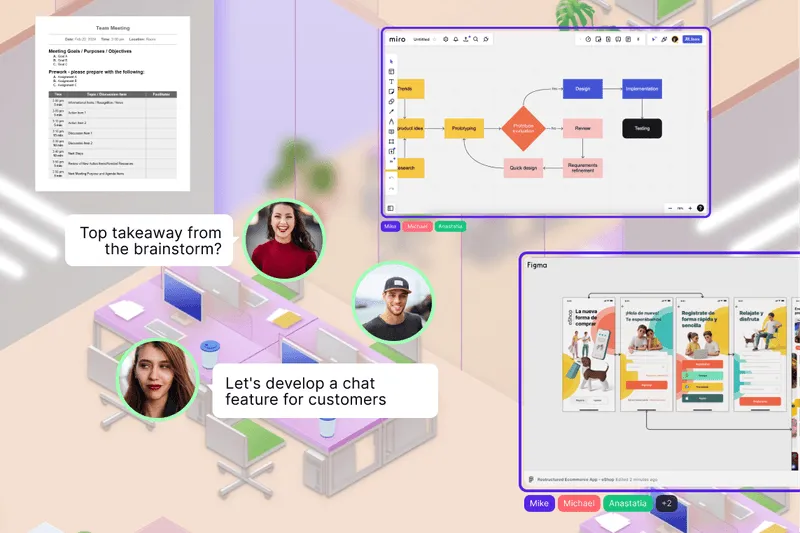
SpatialChat replaces the static video grid with a shared space where people move between conversations. Proximity audio fades in as you approach a group and fades out as you leave, closer to how conversation actually works in a room.
Key features:
Pricing: Free tier available, with paid plans scaling by team size and features.
Best for: Teams and event organizers who want spontaneous conversation and real engagement, not just a meeting that happened to move online.
Limitation: Less of a fit for a simple, single-purpose daily standup where a static grid is genuinely all you need.
See the full SpatialChat vs. Zoom comparison for a direct, feature-by-feature breakdown, and the science of why spatial audio reduces video fatigue for the research behind it.
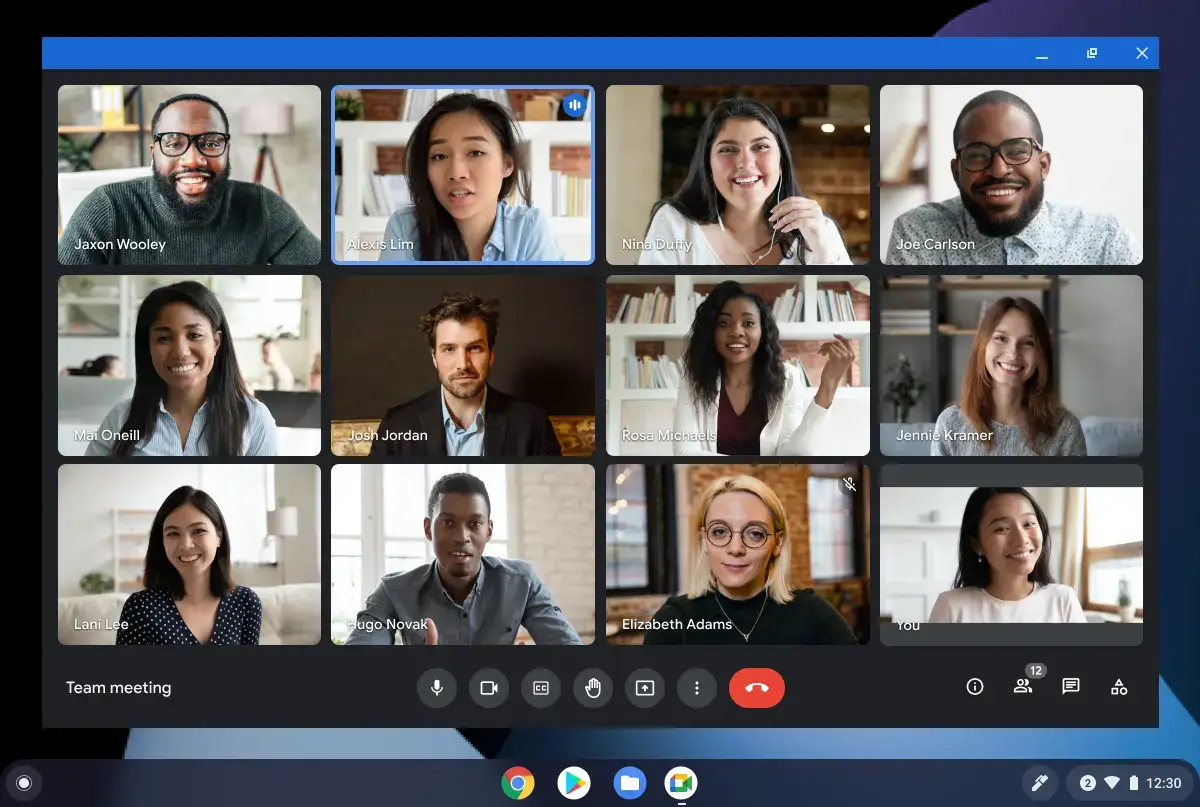
Google Meet is the default choice for any team already living in Gmail, Calendar, and Docs, opening directly from an invite with no separate app required.
Key features:
Pricing: Free for up to 100 participants and 60-minute meetings. Paid Workspace plans run $7-22/user/month, with Gemini AI included.
Best for: Teams already paying for Google Workspace who want video included at no incremental cost.
Limitation: Meet is a feature within Workspace, not a standalone product, so the pricing math only works if you need the rest of the suite too.
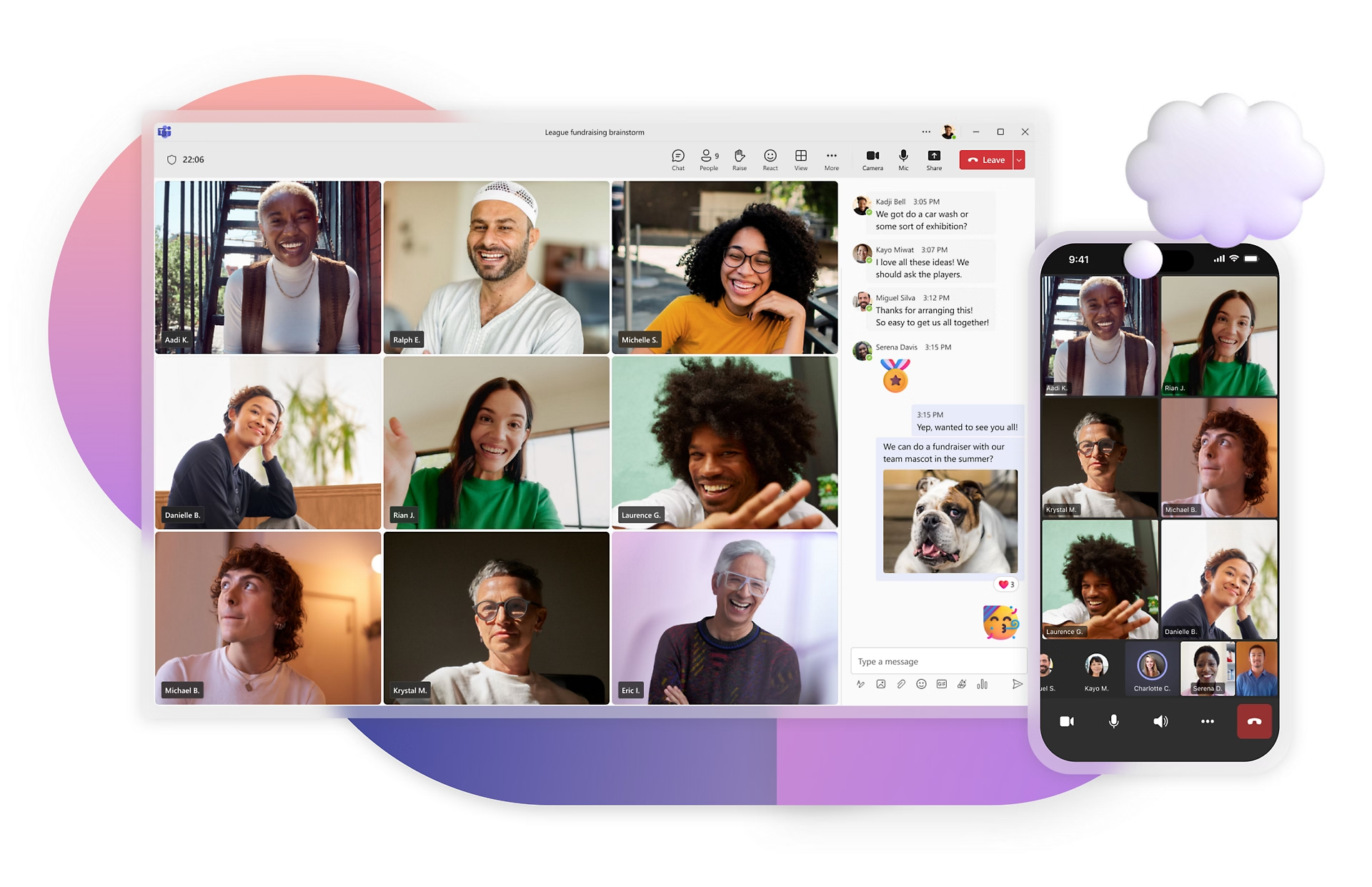
Microsoft Teams works the same way for organizations already inside the Microsoft ecosystem: chat, calling, and meetings alongside Word, Excel, and Outlook.
Key features:
Pricing: Free tier available. Teams Essentials starts around $4/user/month standalone, or $7/user/month bundled into Microsoft 365 Business Basic.
Best for: Organizations already standardized on Microsoft 365 who want meetings included rather than paid for separately.
Limitation: Full functionality often requires a broader Microsoft 365 subscription, similar to Google Meet's ecosystem dependency.
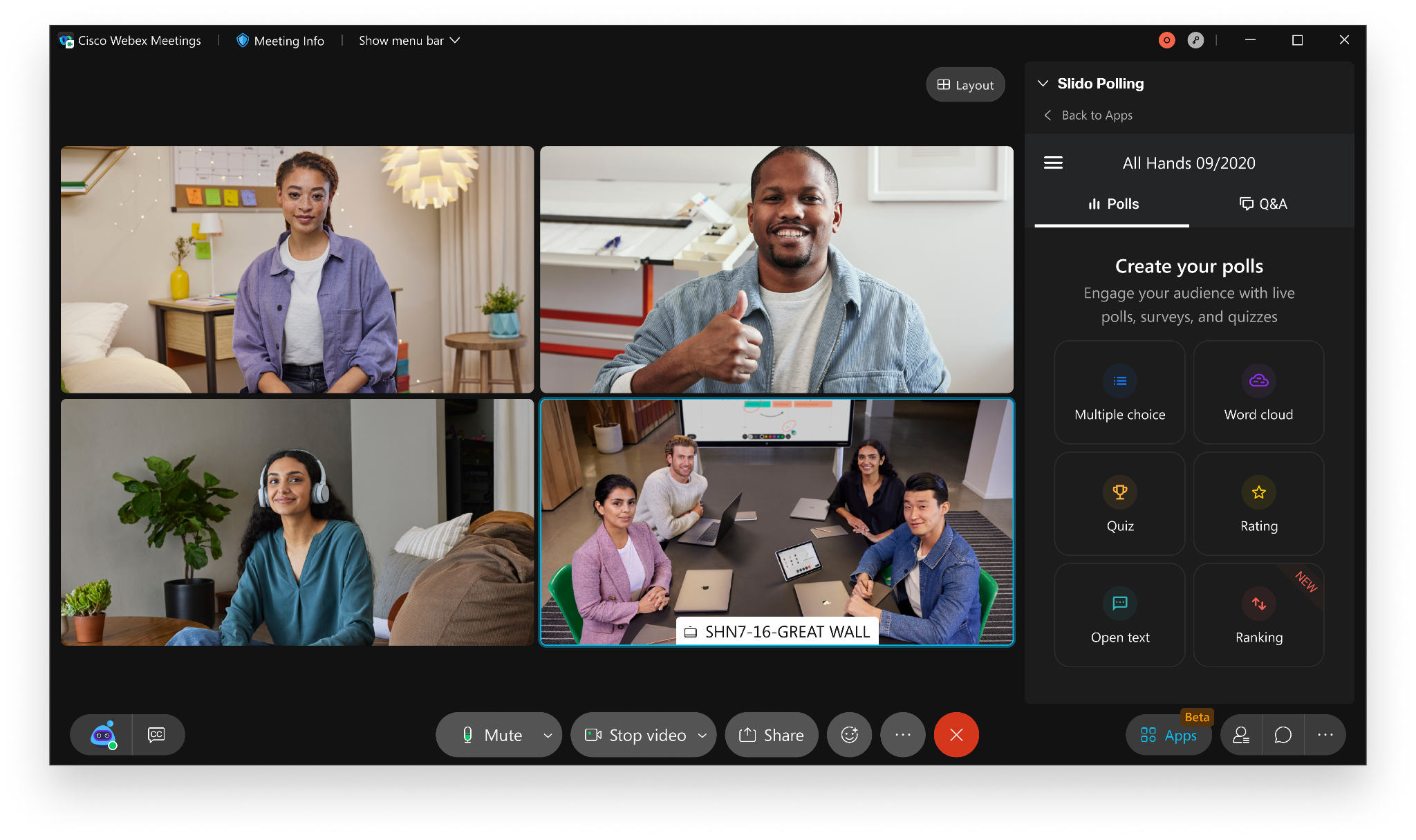
Webex leans on Cisco's enterprise security pedigree, with end-to-end encryption by default even on its free plan.
Key features:
Pricing: Free for 100 attendees with a 40-minute cap. Meet plan around $14.50/user/month, Suite around $25/user/month, custom Enterprise pricing above that.
Best for: Large organizations in healthcare, finance, or government needing strict compliance and security guarantees.
Limitation: Pricing climbs quickly past the entry tier, and Enterprise costs require a sales conversation rather than transparent published rates.
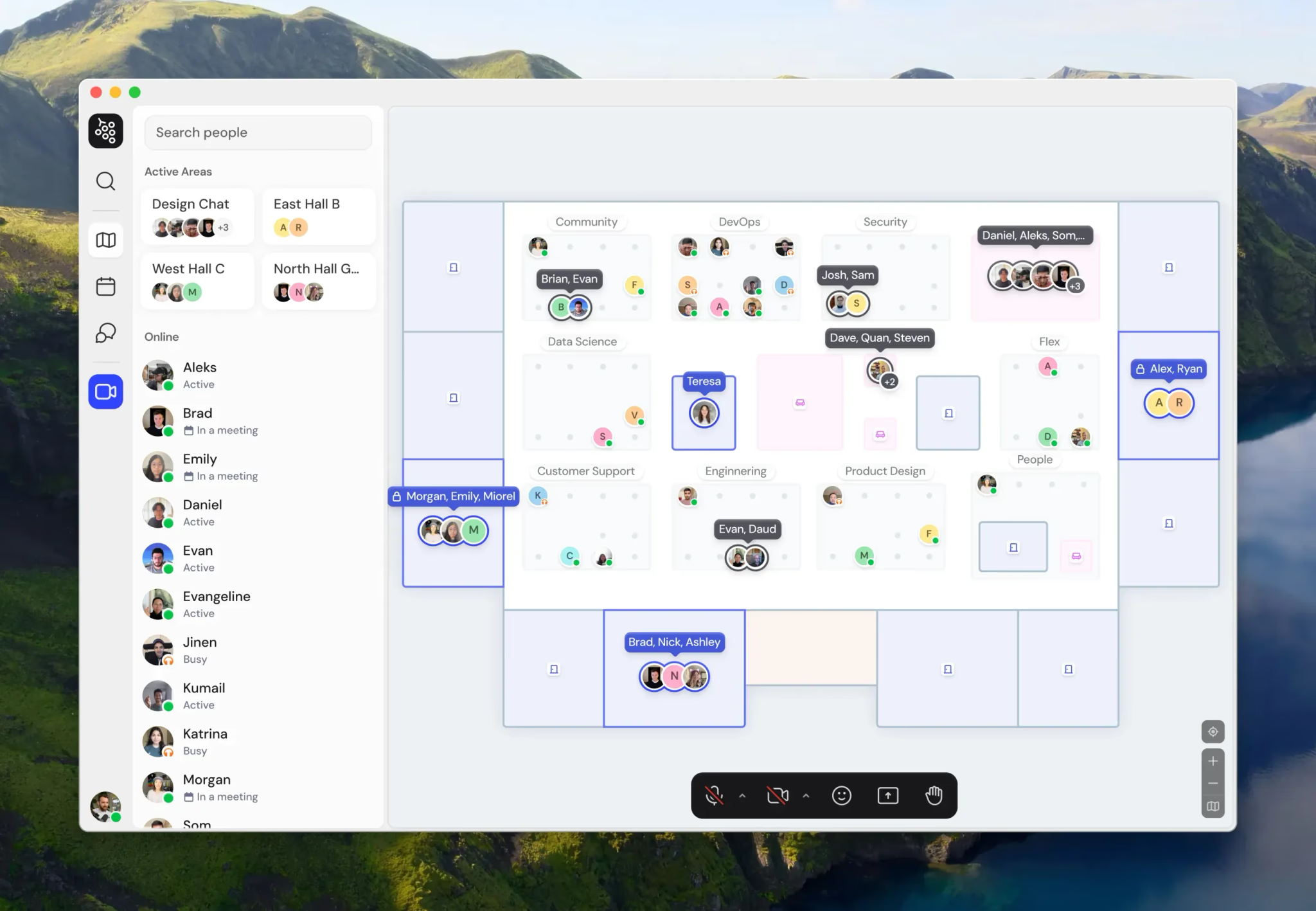
Gather's pixel-art map leans into a game-like aesthetic, aimed at teams that want daily presence to feel less like a meeting tool and more like a shared space.
Key features:
Pricing: $12-15/user/month, after removing its free tier in late 2025.
Best for: Smaller, culture-focused teams who want a playful daily presence tool rather than a scheduled-meeting replacement.
Limitation: Reported to be in maintenance mode with limited new development, and it's built more for daily coworking than structured meetings or events.
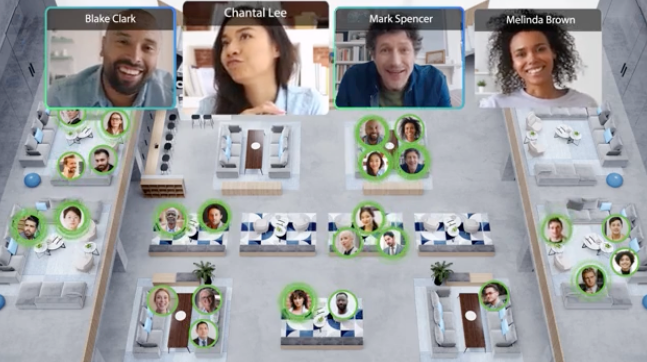
Remo takes a different approach to interaction: a visual floor plan of clickable tables, where joining a conversation means clicking a seat rather than walking up to a group.
Key features:
Pricing: Starter plan from $299/month, with custom Enterprise tiers available.
Best for: Structured networking events and roundtables where small-group conversation is the explicit goal.
Limitation: The table format doesn't suit daily internal meetings well, it's built specifically for event-style networking.
Match the alternative to what you're actually replacing:
Test any alternative with a real meeting or small event before rolling it out broadly. 8 creative meeting formats is a useful starting point once you've picked a platform, to see what's actually possible beyond a standard call.
There's no single best Zoom alternative, only the best fit for what you're actually trying to replace.
Mainstream tools win when ecosystem fit and ubiquity matter most; interactive platforms win when engagement and real conversation are the point.
Start with what's actually driving you to look for an alternative in the first place, whether that's fatigue, cost, or a format Zoom just wasn't built for.
Try SpatialChat free to see what a meeting feels like when it's not just a grid of faces.
Yes, several. SpatialChat, Google Meet, Microsoft Teams, and Webex all offer usable free tiers, though meeting length and participant caps vary. Gather and Remo don't currently offer free plans.
Cisco Webex and Microsoft Teams both handle large-scale broadcasts well, with participant capacity well above typical free-tier limits. For events needing real audience interaction rather than passive viewing, SpatialChat is a stronger fit.
Google Meet and Microsoft Teams have the gentlest learning curve if your team already uses the surrounding ecosystem. Interactive platforms like SpatialChat and Gather need a short adjustment period, but most teams adapt within a session or two.
It's real and documented. Stanford research has linked it to specific factors like constant eye contact and seeing your own face during calls, not just general screen time.
SpatialChat, Google Meet, and Microsoft Teams all work well for small teams on free or low-cost tiers. Webex, Gather, and Remo are better suited to slightly larger teams or dedicated event use.
Some organizations run both in parallel during a transition period rather than switching overnight. Most platforms support calendar integrations that make scheduling consistent regardless of which tool is used for a given meeting.
Meeting-focused tools like Google Meet and Teams are built for recurring, smaller-group calls. Event-focused platforms like SpatialChat and Remo add registration, larger capacity, and structured networking that a meeting tool doesn't need.
There's a small learning curve around movement and proximity, but most users adjust within one or two sessions. The tradeoff is a format that reduces the fatigue of staring at a static grid for hours.
Cisco Webex is generally the strongest choice for healthcare, finance, or government use, with end-to-end encryption by default and deep compliance tooling built specifically for regulated sectors.
It depends entirely on your current plan and team size. Teams already paying for Google Workspace or Microsoft 365 often save the most, since video conferencing comes bundled at no additional cost.